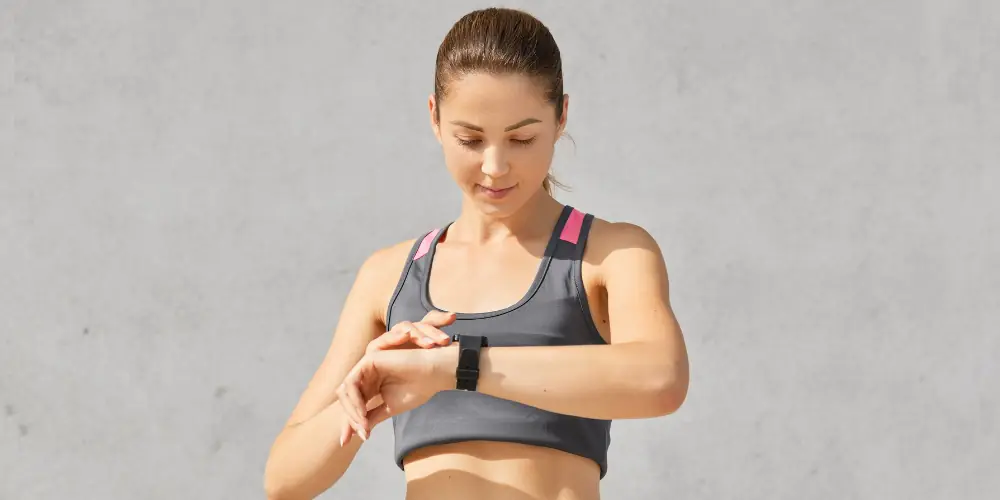
In a world obsessed with fitness apps and smart devices, tracking personal health stats is becoming more than a trend, it’s turning into a real path toward longer, healthier living.
Professor Zahi Fayad, a leading researcher at Mount Sinai’s Biomedical Engineering and Imaging Institute in New York City, believes that the future of medicine lies in how we understand and use our own data.
His approach combines technology, biology, and behavioral science to uncover how everyday habits shape health and longevity.
The Power of Health Data
At Mount Sinai, Fayad leads a research team exploring how continuous health tracking can help prevent chronic diseases such as diabetes, obesity, and heart disease. His passion for the topic goes beyond theory. Fayad wears several digital health devices daily, an Smart Ring, a Smart watch, and even an ECG strap. These tools monitor his heart rate, glucose levels, sleep, and more.
He believes these wearables represent the next big leap in healthcare. “When people keep track of their own metrics,” Fayad explains, “they become more proactive, more aware, and much better equipped to detect small changes before they turn serious.”
This shift toward constant self-monitoring could help identify early warning signs that traditional yearly check-ups often miss. It’s not about replacing doctors but empowering individuals with insights that support healthier decisions every day.
From Imaging to Longevity Research
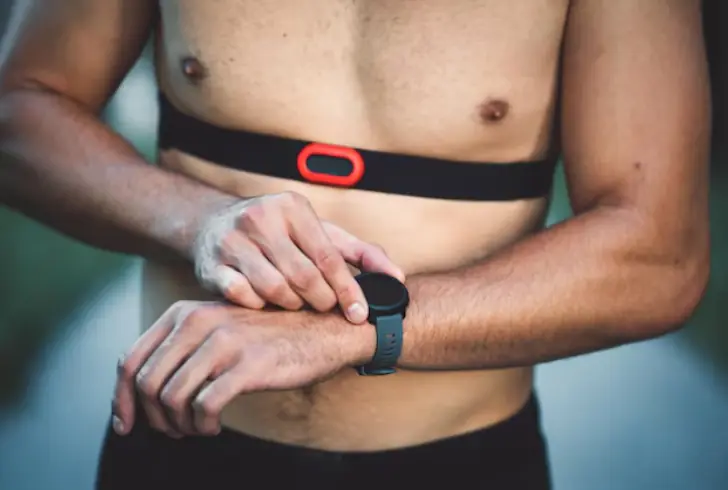
Freepik | EyeEm | Using smart devices to track health is now a genuine path toward a longer life.
Fayad’s journey into longevity research began with a deep curiosity about how lifestyle choices affect the cardiovascular system. Over the years, his focus expanded to include the immune system and the brain. He wanted to understand how diet, exercise, sleep, and stress interact, and how these factors collectively shape long-term health.
“Studying only disease gives us half the picture,” he says. “To truly extend lifespan and healthspan, we need to study health itself.”
This perspective led him to explore imaging tools and digital health technologies. With funding from the National Institutes of Health, his research initially focused on how chronic stress influences the body. As his team advanced, they developed innovative platforms to connect imaging data with real-time health measurements from wearables and sensors.
The Birth of the ‘Digital Twin’ Project
One of Fayad’s most ambitious projects is the “digital twin” initiative, a concept inspired by NASA’s approach to space missions. Just as engineers create a digital copy of a spacecraft to monitor and predict issues, Fayad envisions a virtual model of the human body that mirrors its biological functions in real time.
Traditional medical check-ups only offer a snapshot of health once or twice a year. Fayad argues that to build a true digital twin, continuous data is essential. Metrics such as heart rate, oxygen levels, blood pressure, and glucose levels must be updated regularly. With this data, researchers can run simulations to predict how lifestyle changes or interventions might affect future health outcomes.
“Once we understand someone’s health trajectory,” Fayad explains, “we can run thousands of digital simulations to see how different choices, like diet, exercise, or stress management, might shift that path.”
How ‘Digital Twins’ Could Change Healthcare
The potential applications of “digital twins” are enormous. Imagine being able to detect subtle biological changes long before symptoms appear. Fayad’s model aims to predict early deviations in a person’s health data, signals that could indicate disease risk. “Even before illness develops,” he says, “the body gives small hints. Our goal is to catch those early shifts.”
By analyzing these patterns, doctors could intervene before chronic diseases like heart failure or diabetes progress. Continuous monitoring transforms healthcare from reactive treatment into proactive prevention.
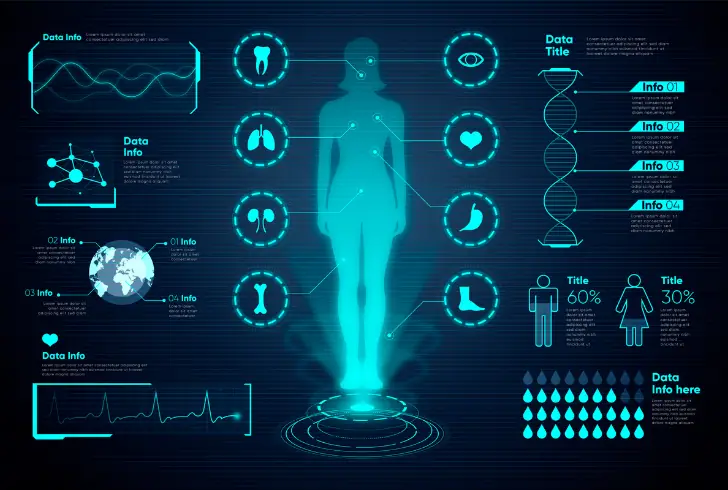
Freepik | Fayad’s digital twin model aims to catch small shifts in health data, predicting illness risk long before any symptoms develop.
Simulations based on a digital twin can also help tailor personalized health plans. For instance, if the system detects a dip in cardiovascular performance, it could recommend specific dietary adjustments or exercise routines proven to restore balance.
This is healthcare powered by prediction rather than reaction, a shift that could redefine modern medicine.
Inside the Digital Twin Study
Participants in Fayad’s study receive a suite of monitoring tools to collect continuous data from home. These include the Smart Ring for sleep and heart rate tracking, a blood pressure cuff, a smart scale, a continuous glucose monitor, a spirometer for lung function, and even environmental sensors that measure air quality and exposure to toxins.
Every three months, participants provide small blood samples for analysis of immune proteins, metabolites, and lipids. Once a year, they undergo a detailed MRI scan that measures everything from brain volume to organ health. The goal is to build an intricate map of how the human body evolves over time.
These data points feed into Mount Sinai’s secure platform, where artificial intelligence models process them to build each participant’s digital twin. Fayad says, “With every new data entry, the twin becomes more accurate, more reflective of your real physiology.”
What Researchers Hope to Learn
For now, the project remains small, involving only a few dozen participants. But Fayad’s ambition is to scale it up dramatically. As funding grows, he hopes to expand the study to thousands, and eventually tens of thousands of participants.
This expansion could unlock powerful insights about how small lifestyle differences influence long-term health. Researchers will be able to identify which biomarkers matter most and which measurements provide the earliest warnings of disease.
“Once we know what’s truly predictive,” Fayad says, “we can focus on the most meaningful metrics.”
Though expensive, the study’s potential to reshape healthcare is enormous. The more people join, the more accurate and effective the digital twin technology will become.
The Future – Hospitals at Home
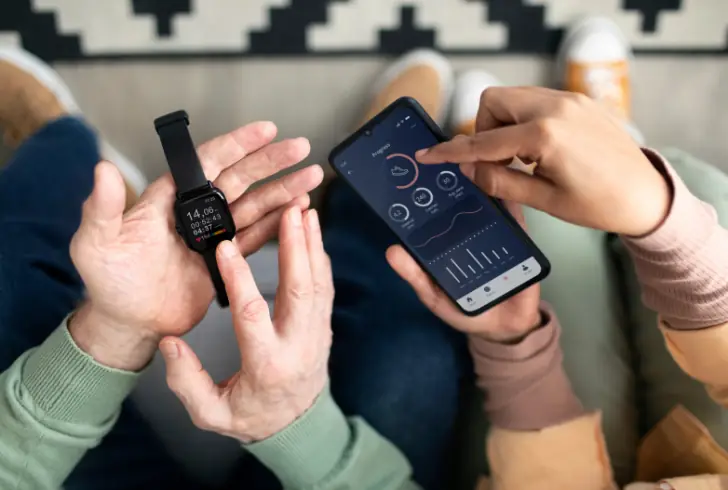
Freepik | Data-driven insights into daily habits are the key to making informed choices for long-term health.
When asked about the next decade of healthcare, Fayad envisions a major transformation, one where hospitals exist mainly for interventions, not routine care. “The hospital of the future will be your home,” he says confidently. “Digital devices will handle the continuous monitoring.”
Wearable and molecular sensors are evolving quickly. Fayad’s team is even developing sweat-based markers that track inflammation, and ultrasound patches that can measure heart activity automatically. These technologies are not science fiction , they’re already in prototype stages.
This shift could lead to a system where diseases are detected and treated long before they become serious, reducing hospital visits and healthcare costs while improving quality of life.
As Fayad explains, “The goal isn’t just to extend life expectancy, but to extend health expectancy, the years spent in good health.”
Why Tracking Matters More Than Ever
Data-driven insights help people understand how daily habits affect their health. With modern tools, individuals can make informed choices about diet, exercise, and mental well-being. The future of longevity may not lie in miracle drugs but in understanding one’s own body in real time.
Projects like the “digital twin” study are showing how heartbeats, sleep patterns, and other metrics can create personalized roadmaps for better living. Continuous monitoring does more than record numbers—it reveals patterns of resilience and adaptation, turning data into actionable health strategies.
With advances in technology and research, health is no longer just about genetics or luck; it’s about awareness and smart action. Tracking vital stats allows people to take control of their health, adding not just years to life but life to those years.